| Brochantite |
|
|
Fluorescent light (daylight)
|
|
|
|
JAB36AP8: Centered aggregates of fibrous Brochantite crystals with very bright luster and an intense color, on a limonite matrix. The specimen, from a very little disclosed locality, comes from the collection of Andrés Jiménez Shelley.
Carmen Mine, Sierra Almagrera, Cuevas del Almanzora, Comarca Levante Almeriense, Almería, Andalusia Spain (2001)
Specimen size: 5.2 × 3.3 × 4.1 cm = 2.05” × 1.30” × 1.61”
Main crystal size: 0.2 × 0.1 cm = 0.08” × 0.04”
Former collection of Andrés Jiménez Shelly
|
|
|
|
Jarosite |
|---|
|
|
N58VL2: A representative specimen from the type locality. On a Limonite matrix, very bright Jarosite crystals showing a tabular habit, some in groups of rosettes and other isolated crystals with developed prism faces. Brown color is very intense and excellent transparency. NASA Opportunity Rover prospecting on planet Mars found Jarosite that may point to the rock's wet history having been in an acidic lake or an acidic hot springs environment, like in Barranco Jaroso deposit.
Jaroso ravine, Almagrera Range, Cuevas del Almanzora, Comarca Levante Almeriense, Almería, Andalusia Spain (1997)
Specimen size: 5.8 × 3.1 × 2.8 cm = 2.28” × 1.22” × 1.10”
Main crystal size: 0.2 × 0.1 cm = 0.08” × 0.04”
Type locality
|
| |
|
| Galena on Dolomite (variety Fe-bearing dolomite) |
|
|
Fluorescent light (daylight)
|
|
|
|
JRB14AP8: Very sharp cubo-octahedral crystals of Galena, quite lustrous and on a matrix of iron-rich Dolomite. The specimen, rare in its perfection for the locality, comes from the collection of Andrés Jiménez Shelley.
Cuesta del Capitán, El Pilar de Jaravía, Pulpí, Comarca Levante Almeriense, Almería, Andalusia Spain (2008)
Specimen size: 4.5 × 4.4 × 1.8 cm = 1.77” × 1.73” × 0.71”
Main crystal size: 0.8 × 0.8 cm = 0.31” × 0.31”
Former collection of Andrés Jiménez Shelly
|
|
|
|
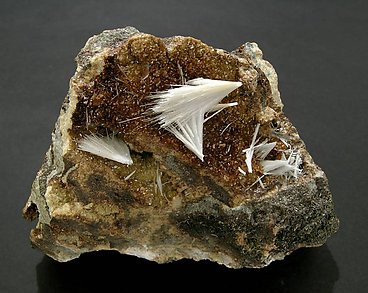
Celestine on Siderite |
|---|
|
|
N88DG8: Enhanced bundle growths, very delicate and esthetical, of very thin acicular crystals, snowy white, contrasting with a base of little brown rhombohedral crystals of Siderite.
El Pilar de Jaravía, Pulpí, Comarca Levante Almeriense, Almería, Andalusia Spain (1997)
Specimen size: 7.5 × 5.5 × 5.5 cm = 2.95” × 2.17” × 2.17”
Main crystal size: 1.6 × 0.5 cm = 0.63” × 0.20”
|
|  |
|
| Baryte with Goethite |
|
|
Fluorescent light (daylight)
|
|
|
|
JAB26AP8: Book-shaped aggregates of very sharp Baryte crystals, translucent, lustrous, colored intense pink, on a Goethite matrix. The specimen is very unusual for the locality, and comes from the collection of Andrés Jiménez Shelly.
Lucainena de las Torres Mines, Lucainena de las Torres, Comarca Los Filabres-Tabernas, Almería, Andalusia Spain
Specimen size: 7.8 × 6 × 2.5 cm = 3.07” × 2.36” × 0.98”
Main crystal size: 3.8 × 1.2 cm = 1.50” × 0.47”
Former collection of Andrés Jiménez Shelly
|
|
|
|
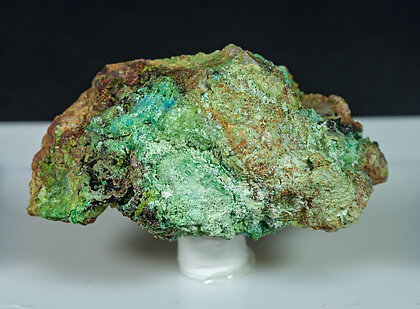
Hidalgoite with Osarizawaite |
|---|
Fluorescent light (daylight)
 |
|
|
XM275MXR: Earthy aggregate formed of a crystalline mass of Hidalgoite, a rare hydroxy-sulphate-arsenate of lead and aluminum, ranging in color from light greenish to a more intense green, and associated with small bluish crystals of Osarizawaite, another lead hydroxy-sulphate-arsenate, of aluminum and copper.
Sol Mine, Cerro de los Guardias, Rodalquilar, Níjar, Comarca Metropolitana de Almería, Almería, Andalusia Spain
Specimen size: 3.2 × 1.9 × 1.8 cm = 1.26” × 0.75” × 0.71”
Former collection of René Borel
|
|  |
|
| Gold with Quartz |
|
|
|
|
|
TG76AJ5: Leafy and hooked native Gold growths on a Quartz matrix. The sample is from the most famous Spanish Gold locality of which only few samples have been preserved.
Rodalquilar, Níjar, Comarca Metropolitana de Almería, Almería, Andalusia Spain
Specimen size: 1.8 × 1.4 × 0.9 cm = 0.71” × 0.55” × 0.35”
Main crystal size: 0.3 × 0.1 cm = 0.12” × 0.04”
|
|
|
|
Gold |
|---|
|
|
NK14AM5: Lamellar and hackly growths of native Gold, on a Quartz matrix. The specimen comes from the most emblematic gold deposit in Spain, of which few specimens are preserved. This specimen comes from the Ignacio Gaspar Sintes collection, whose collection card we will send to the buyer.
340 vein, Rodalquilar, Níjar, Comarca Metropolitana de Almería, Almería, Andalusia Spain (±2019)
Specimen size: 2.6 × 2.4 × 1.9 cm = 1.02” × 0.94” × 0.75”
Former collection of Ignacio Gaspar
|
| |
|
| Gold with Quartz |
|
|
|
|
|
MR16AM3: Gold microcrystals scattered on a Quartz matrix. The specimen is from one of the most classic deposits for Gold in Spain, and comes to us via the Ignacio Gaspar collection (number ORO-88), whose label we will send to the buyer.
340 vein, Rodalquilar, Níjar, Comarca Metropolitana de Almería, Almería, Andalusia Spain (±2013)
Specimen size: 5.7 × 3.5 × 4.3 cm = 2.24” × 1.38” × 1.69”
Former collection of Ignacio Gaspar
|
|
|
|
Rodalquilarite with Jarosite |
|---|
|
|
ND64AE3: Small vugs filled with spheroidal aggregates of yellow Rodalquilarite crystals on a Quartz matrix with Jarosite. The sample is from the type locality for the species and is the consequence of a relatively recent find in the mythical 340 vein.
340 vein, Rodalquilar, Níjar, Comarca Metropolitana de Almería, Almería, Andalusia Spain (2012)
Specimen size: 1.9 × 1.5 × 0.4 cm = 0.75” × 0.59” × 0.16”
Type locality
|
| |
|
| Rodalquilarite with Jarosite |
|
|
|
|
|
TC75NA: Small cavities filled with aggregates of Rodalquilarite crystals, on a Quartz matrix with Jarosite. The specimen comes from the type locality for the species resulting from a find in the now mythical Reef 340.
340 vein, Rodalquilar, Níjar, Comarca Metropolitana de Almería, Almería, Andalusia Spain (2012)
Specimen size: 2.1 × 1.9 × 0.9 cm = 0.83” × 0.75” × 0.35”
Type locality
|
|
|
|
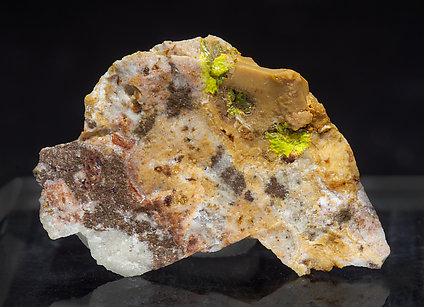
Paratellurite with Rodalquilarite and Jarosite |
|---|
|
|
NZ46AM5: Paratellurite, a rare oxide of tellurium together with colorful Rodalquilarite and small crystals of Jarosite. This specimen comes from the Ignacio Gaspar Sintes collection, whose collection file we will send to the buyer as well as a copy of the analysis.
340 vein, Rodalquilar, Níjar, Comarca Metropolitana de Almería, Almería, Andalusia Spain (±2016)
Specimen size: 2.3 × 1.5 × 0.9 cm = 0.91” × 0.59” × 0.35”
Former collection of Ignacio Gaspar
|
| 
Front | 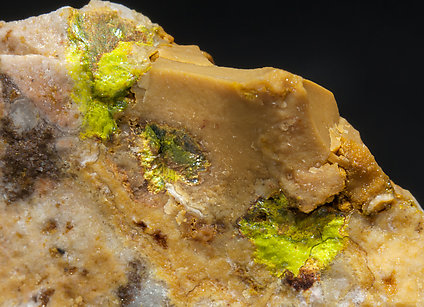
Rodalquilarite and Paratellurite |
| |
|
|
| Fülöppite |
|
|
|
|
|
MD26AL3: Good specimen of this rare lead sulphantimonate, with rosette-like crystal aggregates on matrix, dark metallic grey in color. Fülöppite is one of the rare species associated with Stibnite in this mine.
Casualidad Mine, Cordillera de los Picachos, Baños de Sierra Alhamilla, Pechina, Comarca Metropolitana de Almería, Almería, Andalusia Spain (2014-2015)
Specimen size: 2.9 × 2.4 × 1.9 cm = 1.14” × 0.94” × 0.75”
Main crystal size: 0.1 × 0.1 cm = 0.04” × 0.04”
|
|
|
|
Fülöppite |
|---|
|
|
MN26AL3: Good specimen of this rare lead sulphantimonate, with rosette-like crystal aggregates on matrix, dark metallic grey in color. Fülöppite is one of the rare species associated with Stibnite in this mine.
Casualidad Mine, Cordillera de los Picachos, Baños de Sierra Alhamilla, Pechina, Comarca Metropolitana de Almería, Almería, Andalusia Spain (2014-2015)
Specimen size: 4.7 × 3.9 × 2 cm = 1.85” × 1.54” × 0.79”
Main crystal size: 0.1 × 0.1 cm = 0.04” × 0.04”
|
| |
|
| Sulphur |
|
 |
Fluorescent light (daylight)
|
|
|
|
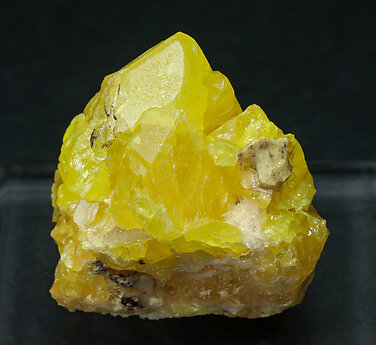
ETR86AP0: Sulphur crystals with sharp crystal forms, translucent, of good size for the locality and with an intense and uniform color.
A Spanish classic of excellent quality that comes from the collection of General Robert Touchon.
Cáucaso Mine, Conil Mines, Conil de la Frontera, Comarca La Janda, Cádiz, Andalusia Spain
Specimen size: 3.4 × 3.2 × 3.1 cm = 1.34” × 1.26” × 1.22”
Main crystal size: 1.9 × 1.2 cm = 0.75” × 0.47”
Former collection of Robert Touchon
|
|
|
|
Sulphur |
|---|
Fluorescent light (daylight)
|
|
|
JZM47AP8: Very aerial growth of Sulphur crystals, one of them clearly dominant, with very sharp crystal forms, translucent and very lustrous.
This classic specimen for Spanish mineralogy comes from the collection of Andrés Jiménez Shelley.
Cáucaso Mine, Conil Mines, Conil de la Frontera, Comarca La Janda, Cádiz, Andalusia Spain
Specimen size: 4 × 2.9 × 2.3 cm = 1.57” × 1.14” × 0.91”
Main crystal size: 1.8 × 1.7 cm = 0.71” × 0.67”
Former collection of Andrés Jiménez Shelly
|
| |
|
| Sulphur with Calcite |
|
|
Fluorescent light (daylight)
|
|
|
|
JXM16AP8: Dipyramidal Sulphur crystals, one of them very profiled, with very sharp crystal forms, translucent and very lustrous, with Calcite and on matrix.
The specimen is a classic for Spanish mineralogy, comes to us from the collection of Andrés Jiménez Shelly, and was previously in the Carlos Prieto Paramio collection.
Conil de la Frontera, Comarca La Janda, Cádiz, Andalusia Spain
Specimen size: 4.7 × 3.2 × 2.6 cm = 1.85” × 1.26” × 1.02”
Main crystal size: 1 × 0.4 cm = 0.39” × 0.16”
Former collection of Carlos Prieto Paramio
Former collection of Andrés Jiménez Shelly
|
|
|
|
Sulphur with Calcite |
|---|
Fluorescent light (daylight)
|
|
|
NGR86AO3: Equant Sulphur crystals with very sharp crystal forms, translucent, lustrous, on matrix and with small colorless scalenohedral Calcite crystals.
A very old Spanish classic, practically impossible to find nowadays.
Cáucaso Mine, Conil Mines, Conil de la Frontera, Comarca La Janda, Cádiz, Andalusia Spain
Specimen size: 7.9 × 6.9 × 3.9 cm = 3.11” × 2.72” × 1.54”
Main crystal size: 1.3 × 0.7 cm = 0.51” × 0.28”
Calcite fluorescent long & short UV
|
| |
|
| Baryte |
|
 |
|
|
|
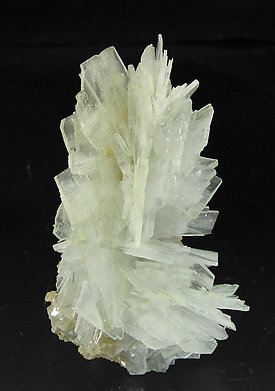
NQ58P3: Group of sharp laminar crystals. They are transparent, slightly bluish and implanted on a thin matrix. The sample is from the first find of good material at the locality (between September 2002 and March 2003) but we decided not to publish it before knowing the exact locality, just determined in August 2009.
El Telegrama adit, La Beltraneja concession, Cortijuelo Mines, Bacares, Comarca Valle del Almanzora, Almería, Andalusia Spain (09/2002-03/2003)
Specimen size: 4.9 × 3 × 2.1 cm = 1.93” × 1.18” × 0.83”
Main crystal size: 1 × 0.8 cm = 0.39” × 0.31”
Fluorescent long & short UV
|
|
|
|
Baryte |
|---|
|
|
TC65NT: Group of very sharp tabular Baryte crystals, translucent and with a white color. The specimen comes from the first finds of quality material at the locality (between September 2002 and March 2003)
El Telegrama adit, La Beltraneja concession, Cortijuelo Mines, Bacares, Comarca Valle del Almanzora, Almería, Andalusia Spain (09/2002-03/2003)
Specimen size: 5.1 × 3.6 × 2.4 cm = 2.01” × 1.42” × 0.94”
Main crystal size: 2.5 × 1.4 cm = 0.98” × 0.55”
|
|  |
|
| Baryte |
|
|
|
|
|
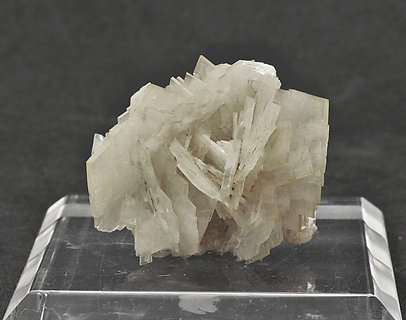
NK13AJ4: Group of very sharp laminar crystals, transparent and colorless. The sample is from the initial finds of good quality material from the locality between September 2002 and March 2003.
El Telegrama adit, La Beltraneja concession, Cortijuelo Mines, Bacares, Comarca Valle del Almanzora, Almería, Andalusia Spain (09/2002-03/2003)
Specimen size: 7.5 × 4 × 2.1 cm = 2.95” × 1.57” × 0.83”
Main crystal size: 1.8 × 0.2 cm = 0.71” × 0.08”
Fluorescent long & short UV
|
|
|
|
Baryte |
|---|
|
|
NB86AJ4: Group of very sharp laminar crystals, transparent and colorless, with small, white, rhombohedral Calcite crystals. The sample is from the initial finds of good quality material from the locality between September 2002 and March 2003.
El Telegrama adit, La Beltraneja concession, Cortijuelo Mines, Bacares, Comarca Valle del Almanzora, Almería, Andalusia Spain (09/2002-03/2003)
Specimen size: 10.2 × 7 × 3.7 cm = 4.02” × 2.76” × 1.46”
Main crystal size: 2 × 1.8 cm = 0.79” × 0.71”
Fluorescent long & short UV
|
| |
|
| Baryte with Calcite |
|
|
|
|
|
NX14P3: Group of sharp laminar crystals, transparent and slightly bluish with some of their edges coated by small crystals of white Calcite and on matrix. The sample is from the first find of good material at the locality (between September 2002 and March 2003) but we decided not to publish it before knowing the exact locality, just determined in August 2009.
El Telegrama adit, La Beltraneja concession, Cortijuelo Mines, Bacares, Comarca Valle del Almanzora, Almería, Andalusia Spain (09/2002-03/2003)
Specimen size: 10.7 × 6.3 × 3.3 cm = 4.21” × 2.48” × 1.30”
Main crystal size: 1 × 1 cm = 0.39” × 0.39”
Fluorescent long & short UV
|
|
|
|
Baryte |
|---|
|
|
NF47Q2: Group of sharp crystals implanted on a thin matrix. The sample is from the first find of good material at the locality (between September 2002 and March 2003)
El Telegrama adit, La Beltraneja concession, Cortijuelo Mines, Bacares, Comarca Valle del Almanzora, Almería, Andalusia Spain (09/2002-03/2003)
Specimen size: 11.7 × 6.8 × 6.5 cm = 4.61” × 2.68” × 2.56”
Main crystal size: 4 × 3.2 cm = 1.57” × 1.26”
Fluorescent long & short UV
|
| |
|
| Baryte |
|
 |
|
|
|
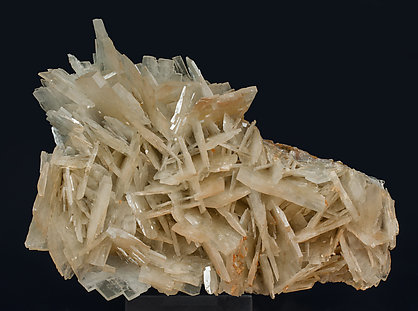
NV66AJ4: Group of very sharp laminar crystals, translucent and white. The sample is from the initial finds of good quality material from the locality between September 2002 and March 2003.
El Telegrama adit, La Beltraneja concession, Cortijuelo Mines, Bacares, Comarca Valle del Almanzora, Almería, Andalusia Spain (09/2002-03/2003)
Specimen size: 12.7 × 8 × 3.9 cm = 5.00” × 3.15” × 1.54”
Main crystal size: 3 × 2.7 cm = 1.18” × 1.06”
Fluorescent long & short UV
|
|
|
|
Baryte with Quartz |
|---|
Fluorescent light (daylight)
|
|
|
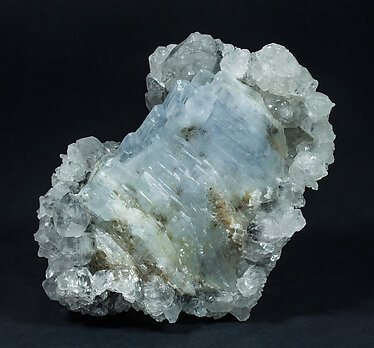
JXM76AP8: It is very unusual for barytes from this mine to be bluish in color, and to have that Quartz crystal ornament with its certain quality.
It comes from a mine where it has never been easy to find well crystallized specimens, much less so aesthetic and with some color, as is the case with this piece.
The specimen has been photographed and published in the magazine ‘Paragénesis’, number 2023-2, page 30
Guillermín Mine, Guillermín Mining Group, Alcaracejos, Comarca Los Pedroches, Córdoba, Andalusia Spain (1990)
Specimen size: 8.2 × 6.1 × 4.6 cm = 3.23” × 2.40” × 1.81”
Main crystal size: 5.5 × 3.4 cm = 2.17” × 1.34”
Former collection of Andrés Jiménez Shelly
|
| 
Front | 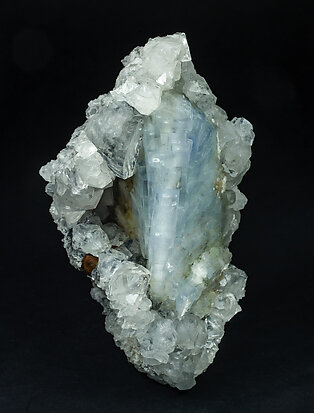
Side |
| |
|
|
| Pyromorphite |
|
 |
|
|
|
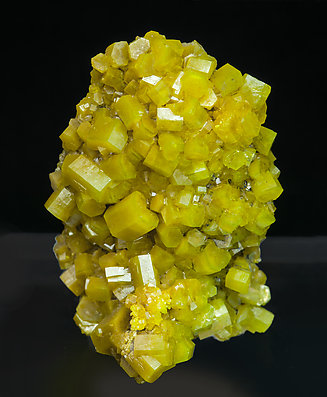
EB14AK5: Group of short prismatic crystals, many of them doubly terminated, with excellent terminations, lustrous, and with small white flattened Cerussite crystals on the back. The specimen comes from the first finds in the Santa Eufemia area.
Santa Eufemia, Comarca Los Pedroches, Córdoba, Andalusia Spain
Specimen size: 2.6 × 1.8 × 1.2 cm = 1.02” × 0.71” × 0.47”
Main crystal size: 0.3 × 0.2 cm = 0.12” × 0.08”
|
|
|
|
Pyromorphite |
|---|
|
|
NW63R2: From an unexpected find in an old lead mining area of Roman time where the Pyromorphites appeared previously, although with a different shape than this specimen. Its habit and color, very distinctive, make this find unmistakable. It has become a Spanish classic. This specimen comes from a first selection of the specimens when they were found.
Resuperferolítica claim, Cerro de la Canaleja, Santa Eufemia, Comarca Los Pedroches, Córdoba, Andalusia Spain (04/1995)
Specimen size: 2.8 × 2.4 × 1.8 cm = 1.10” × 0.94” × 0.71”
Main crystal size: 0.7 × 0.2 cm = 0.28” × 0.08”
Minor fluorescence long & short UV
|
|  |
|
| Pyromorphite |
|
Front | 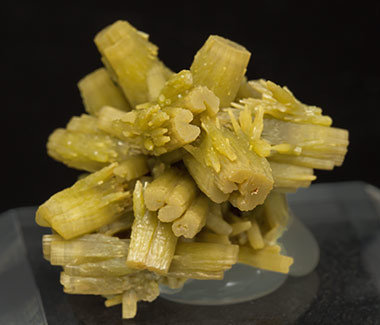
Side |
| |
|
|
|
|
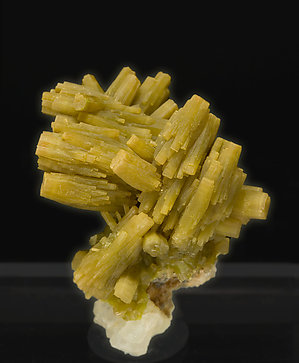
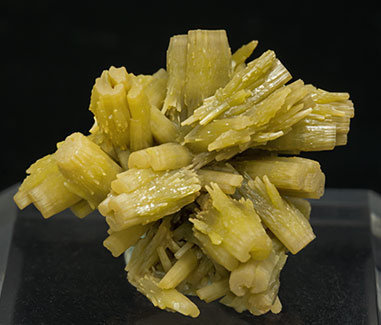
NC26AE3: Aggregate, on matrix, of prismatic crystals, some with deep hollowed terminations, and very well defined parallel growths. Its habit and brown color with greenish shades are very distinctive and make the samples from this find unmistakable and it has become a Spanish classic. The specimen is from a cavity in an old lead mining area of Roman time where Pyromorphites appeared previously.
Resuperferolítica claim, Cerro de la Canaleja, Santa Eufemia, Comarca Los Pedroches, Córdoba, Andalusia Spain (04/1995)
Specimen size: 2.9 × 2.4 × 2.5 cm = 1.14” × 0.94” × 0.98”
Main crystal size: 0.9 × 0.5 cm = 0.35” × 0.20”
Minor fluorescence long & short UV
|
|
|
|
Pyromorphite |
|---|
|
|
NC26R2: From an unexpected find in an old lead mining area of Roman time where the Pyromorphites appeared previously, although with a different shape than this specimen. Its habit and color, very distinctive, make this find unmistakable. It has become a Spanish classic. This specimen comes from a first selection of the specimens when they were found.
Resuperferolítica claim, Cerro de la Canaleja, Santa Eufemia, Comarca Los Pedroches, Córdoba, Andalusia Spain (04/1995)
Specimen size: 3.4 × 2.2 × 1.7 cm = 1.34” × 0.87” × 0.67”
Main crystal size: 0.5 × 0.4 cm = 0.20” × 0.16”
Minor fluorescence long & short UV
|
|  |
|
| Pyromorphite |
|
Front | 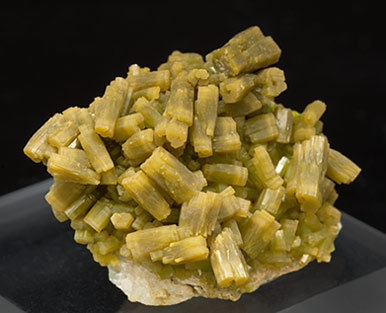
Side |
| |
|
|
|
|
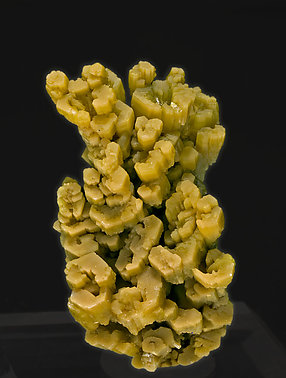
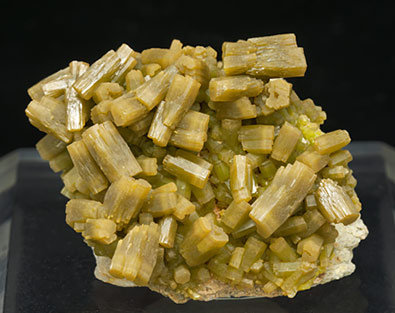
NT16AE3: Aggregate, on matrix, of prismatic crystals, some with deep hollowed terminations, and very well defined parallel growths. Its habit and brown color with greenish shades are very distinctive and make the samples from this find unmistakable and it has become a Spanish classic. The specimen is from a cavity in an old lead mining area of Roman time where Pyromorphites appeared previously.
Resuperferolítica claim, Cerro de la Canaleja, Santa Eufemia, Comarca Los Pedroches, Córdoba, Andalusia Spain (04/1995)
Specimen size: 3.4 × 2.7 × 2.9 cm = 1.34” × 1.06” × 1.14”
Main crystal size: 0.8 × 0.4 cm = 0.31” × 0.16”
Minor fluorescence long & short UV
|
|
|
|
Pyromorphite |
|---|
|
|
NK36R2: From an unexpected find in an old lead mining area of Roman time where the Pyromorphites appeared previously, although with a different shape than this specimen. Its habit and color, very distinctive, make this find unmistakable. It has become a Spanish classic. This specimen comes from a first selection of the specimens when they were found.
Resuperferolítica claim, Cerro de la Canaleja, Santa Eufemia, Comarca Los Pedroches, Córdoba, Andalusia Spain (04/1995)
Specimen size: 3.7 × 3.4 × 2.7 cm = 1.46” × 1.34” × 1.06”
Main crystal size: 0.7 × 0.4 cm = 0.28” × 0.16”
Minor fluorescence long & short UV
|
|  |
|
| Pyromorphite |
|
Front | 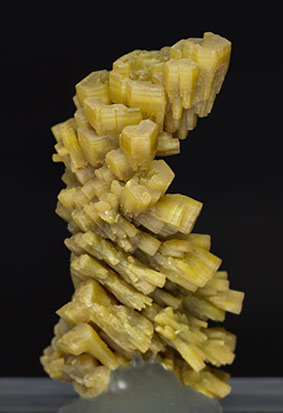
Rear |
| |
|
|
|
|
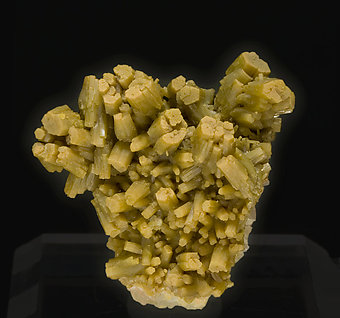
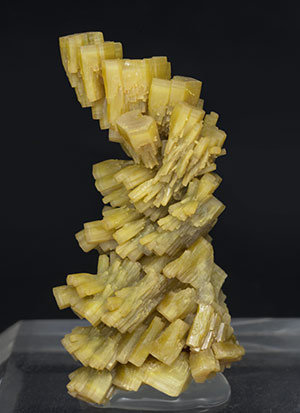
ND66AD5: The sample is from a cavity in an old lead mining area of Roman times where Pyromorphite appeared previously. The elongated shape, with subparallel growths and their brown-slightly greenish color, make this find unmistakable. It has become a Spanish classic.
Resuperferolítica claim, Cerro de la Canaleja, Santa Eufemia, Comarca Los Pedroches, Córdoba, Andalusia Spain (04/1995)
Specimen size: 4 × 1.9 × 1.5 cm = 1.57” × 0.75” × 0.59”
Main crystal size: 0.7 × 0.7 cm = 0.28” × 0.28”
Minor fluorescence long & short UV
|
|
|
|
Pyromorphite |
|---|
|
|
N46DGI7: Densely grouped prismatic crystals on matrix. They are doubly terminated and have very well defined faces and edges. The color is very much greener than usual on samples from this location and they have clearer zones on the terminations.
Resuperferolítica claim, Cerro de la Canaleja, Santa Eufemia, Comarca Los Pedroches, Córdoba, Andalusia Spain (1995)
Specimen size: 6.7 × 3.5 × 3.7 cm = 2.64” × 1.38” × 1.46”
Main crystal size: 0.5 × 0.2 cm = 0.20” × 0.08”
Fluorescent long & short UV
|
| |
|
| Pyromorphite |
|
|
Fluorescent light (daylight)
|
|
|
|
JRB48AP8: Druse of Pyromorphite crystals, on matrix, with an elongated habit and hopper-shaped terminations forming parallel growths, many of them doubly terminated. With good luster and greener tones than most of the specimens from this locality, an old mining district already exploited in Roman times.
The specimen comes from the collection of Andrés Jiménez Shelly.
Resuperferolítica claim, Cerro de la Canaleja, Santa Eufemia, Comarca Los Pedroches, Córdoba, Andalusia Spain (04/1995)
Specimen size: 7 × 4.5 × 3.7 cm = 2.76” × 1.77” × 1.46”
Main crystal size: 1 × 1 cm = 0.39” × 0.39”
Minor fluorescence long & short UV
Former collection of Andrés Jiménez Shelly
|
|
|
|
Pyromorphite |
|---|
|
|
E26DPC7: As well as being much greener than other specimens from this mine this specimen has its own special history. Jordi bought it during the 1994 Munich show from a German collector, but then the following year a major find was made at the same mine. So while the German guy had the right idea, in the end other collectors made the killer find - that's life I guess.
Resuperferolítica claim, Cerro de la Canaleja, Santa Eufemia, Comarca Los Pedroches, Córdoba, Andalusia Spain (1995)
Specimen size: 11.2 × 7.5 × 1.2 cm = 4.41” × 2.95” × 0.47”
|
| |
|
| Andalusite with Mica |
|
 |
|
|
|
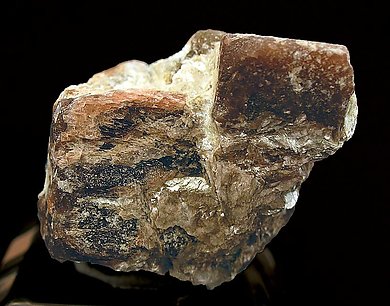
NR87E1: The name for the Andalusite species comes from the Spanish region of Andalucia, This one comes from Cordoba, Andalucia, which is in the south of Spain. Given its size, good crystal form and pleasant color it cannot be confused with any other collectable Andalucite.
Los Torilejos area, Hornachuelos, Comarca Valle Medio del Guadalquivir, Córdoba, Andalusia Spain (1992)
Specimen size: 3 × 3 × 2.5 cm = 1.18” × 1.18” × 0.98”
Main crystal size: 1.7 × 1.5 cm = 0.67” × 0.59”
|
|
|
|
Andalusite with Quartz and Mica |
|---|
|
|
NR86AJ5: Andalusite crystals with simple forms and very well defined faces and edges and with excellent terminal faces. With an intense pink color with some lilac tonalities. They are on a matrix partially coated by leafy Muscovite aggregates. The sample is from a find, many years ago, in an area where access is currently prohibited.
Los Torilejos area, Hornachuelos, Comarca Valle Medio del Guadalquivir, Córdoba, Andalusia Spain (1992)
Specimen size: 10.2 × 9 × 5.7 cm = 4.02” × 3.54” × 2.24”
Main crystal size: 4 × 1.2 cm = 1.57” × 0.47”
|
| |
|
| Andalusite with Mica |
|
Front | 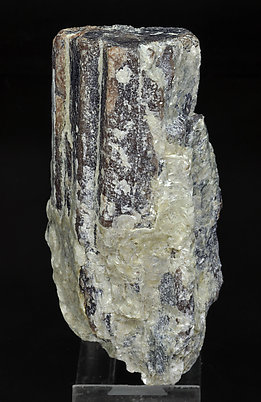
Side |
| |
|
|
|
|
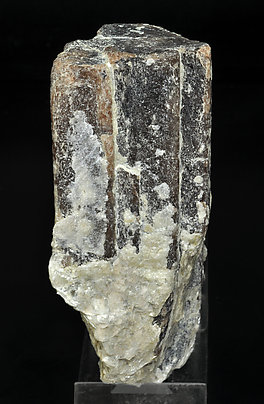
EX64X9: Andalusite crystal with very well defined faces and edges, with a perfect smooth termination and very well marked parallel growths on the prism faces and partially coated by Muscovite. The sample is from a relatively recent find in an area where access is currently prohibited.
Los Torilejos area, Hornachuelos, Comarca Valle Medio del Guadalquivir, Córdoba, Andalusia Spain (1993)
Specimen size: 11 × 4.5 × 5.5 cm = 4.33” × 1.77” × 2.17”
|
|
|
|
Rutile (variety niobian rutile) |
|---|
Fluorescent light (daylight)
|
|
|
JTB96AP8: Single very sharp crystal, on matrix, of niobium-rich Rutile, with very sharp crystal forms and, as a rarity, with no twinning.
The specimen comes from the collection of Andrés Jiménez Shelly.
Diéresis Mine, Puerto del Cabril, Hornachuelos, Comarca Valle Medio del Guadalquivir, Córdoba, Andalusia Spain
Specimen size: 5 × 3.7 × 3.2 cm = 1.97” × 1.46” × 1.26”
Main crystal size: 1.3 × 0.6 cm = 0.51” × 0.24”
Former collection of Andrés Jiménez Shelly
|
| |
|
The small San Andrés Mine in Villaviciosa, Córdoba, produced, over the period 1997-1998, some really great Pyromorphite! The color is a fantastic apple green and their brilliance is typical of the specimens that in the past have made this mine famous. These are, without doubt, the best Pyromorphite found in Europe during the last few years, and they really compete well with the famous American Bunker Hill Pyromorphite, and with the new Chinese ones. The specimens were found in two different pockets. The first one was found in November 1997 and it was called 'Realces' pocket. The second (and last) one was found in November 1998. It was called the 'Geoda del Tunel' pocket. Unfortunately, after these two pockets the mine entrance was blocked by tons of rubble.
| Pyromorphite |
|
|
|
|
|
NB10AI5: Clusters of prismatic and very acute elongated crystals, a very unusual habit for San Andrés Pyromorhite, similar to the samples from El Horcajo.
This sample is from the Ignacio Gaspar collection and we’ll send to the buyer a copy of the original label.
San Andrés Mine, Espiel, Comarca Valle del Guadiato, Córdoba, Andalusia Spain (1987)
Specimen size: 1.4 × 1.4 × 1 cm = 0.55” × 0.55” × 0.39”
Minor fluorescence short UV
Former collection of Ignacio Gaspar
|
|
|
|
Pyromorphite |
|---|
|
|
NA67AI5: Groups of mainly prismatic Pyromorphite crystals that coexist with very acute elongated crystals, a very unusual habit for San Andrés Pyromorphite, similar to the samples from El Horcajo.
This sample is from the Ignacio Gaspar collection and we’ll send to the buyer the original label.
San Andrés Mine, Espiel, Comarca Valle del Guadiato, Córdoba, Andalusia Spain (1987)
Specimen size: 2.7 × 2 × 3 cm = 1.06” × 0.79” × 1.18”
Minor fluorescence short UV
Former collection of Ignacio Gaspar
|
| |
|
| Pyromorphite |
|
|
|
|
|
ND37AI5: Clusters of prismatic and very acute elongated crystals, a very unusual habit for San Andrés Pyromorhite, similar to the samples from El Horcajo.
This sample is from the Ignacio Gaspar collection and we’ll send to the buyer a copy of the original label.
This specimen was published on the Mineralogical Record´s web page, in the ‘What's New’ section, report 51, December 5, 2018 edition.
San Andrés Mine, Espiel, Comarca Valle del Guadiato, Córdoba, Andalusia Spain (1987)
Specimen size: 3.1 × 3.1 × 1.9 cm = 1.22” × 1.22” × 0.75”
Minor fluorescence short UV
Former collection of Ignacio Gaspar
|
|
|
|
Pyromorphite |
|---|
Fluorescent light (daylight)
|
|
|
MFG47AP5: Group on matrix of prismatic Pyromorphite crystals, many of them doubly terminated, with very good luster and a vivid color, which coexist with another generation of smaller crystals and darker color. A glory from the past, coming from the first discoveries in the San Andrés mine in the mid-1980s.
San Andrés Mine, Espiel, Comarca Valle del Guadiato, Córdoba, Andalusia Spain (±1985)
Specimen size: 4.2 × 2.7 × 3.3 cm = 1.65” × 1.06” × 1.30”
Main crystal size: 0.4 × 0.3 cm = 0.16” × 0.12”
Minor fluorescence short UV
Former collection of Dénis Galmier
|
| |
|
| Pyromorphite |
|
|
Fluorescent light (daylight)
|
|
|
|
JLA27AP8: Aerial group, on matrix, of prismatic crystals of Pyromorphite, many of them doubly terminated, with well-defined faces and edges, flattened pinacoidal terminations, with excellent color and luster.
The specimen comes from the collection of Andrés Jiménez Shelly.
San Andrés Mine, Espiel, Comarca Valle del Guadiato, Córdoba, Andalusia Spain (1987)
Specimen size: 4.6 × 3.3 × 2.8 cm = 1.81” × 1.30” × 1.10”
Main crystal size: 0.3 × 0.3 cm = 0.12” × 0.12”
Minor fluorescence short UV
Former collection of Andrés Jiménez Shelly
|
|
|
|
Pyromorphite |
|---|
Fluorescent light (daylight)
|
|
|
ERB50AP2: Druse formed of Pyromorphite crystals with a uniform apple-green color and good luster, with doubly terminated crystals with a prismatic habit and flat terminations, and with small traces of matrix at the base and back of the piece.
A glory of the past, very representative of the best that the San Andrés Mine produced.
San Andrés Mine, Espiel, Comarca Valle del Guadiato, Córdoba, Andalusia Spain
Specimen size: 6.7 × 5.6 × 3.5 cm = 2.64” × 2.20” × 1.38”
Main crystal size: 1 × 0.6 cm = 0.39” × 0.24”
|
| |
|
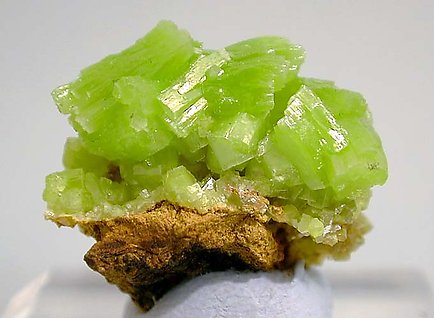
The small San Andrés Mine in Villaviciosa, Córdoba, produced, over the period 1997-1998, some really great Pyromorphite! The color is a fantastic apple green and their brilliance is typical of the specimens that in the past have made this mine famous. These are, without doubt, the best Pyromorphite found in Europe during the last few years, and they really compete well with the famous American Bunker Hill Pyromorphite, and with the new Chinese ones. The specimens were found in two different pockets. The first one was found in November 1997 and it was called 'Realces' pocket. The second (and last) one was found in November 1998. It was called the 'Geoda del Tunel' pocket. Unfortunately, after these two pockets the mine entrance was blocked by tons of rubble.
| Pyromorphite |
|
 |
|
|
|
N80L:
San Andrés Mine, Realces pocket (Victoria), Espiel, Comarca Valle del Guadiato, Córdoba, Andalusia Spain (11/1997)
Specimen size: 2.2 × 2 cm = 0.87” × 0.79”
|
|
|
|
Pyromorphite |
|---|
|
|
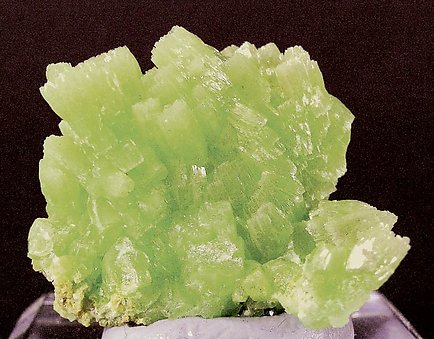
N36KD0: A very aerial group with green doubly terminated crystals with multiple hexagonal terminations.
San Andrés Mine, Realces pocket (Victoria), Espiel, Comarca Valle del Guadiato, Córdoba, Andalusia Spain (10-11/1997)
Specimen size: 2.7 × 2.4 × 1.4 cm = 1.06” × 0.94” × 0.55”
|
|  |
|
| Pyromorphite |
|
|
|
|
|
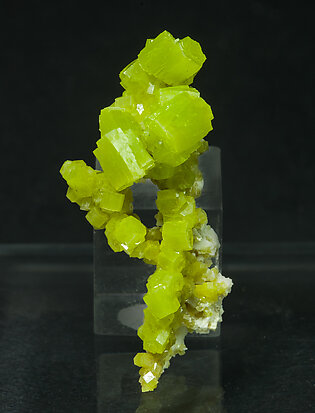
N87ZD0: Group of prismatic crystals with multiple, brushlike terminations. Color and luster are good and crystals are on matrix.
San Andrés Mine, Realces pocket (Victoria), Espiel, Comarca Valle del Guadiato, Córdoba, Andalusia Spain (11/1997)
Specimen size: 2.8 × 2.5 × 2 cm = 1.10” × 0.98” × 0.79”
|
|
|
|
Pyromorphite |
|---|
|
|
SV180NGH: Group of elongatedc crystals of Pyromorphite, with a very aerial development, doubly terminated, with well-defined faces and edges and flattened pinacoidal terminations with an extraordinary color and luster.
It comes from one of the best pockets in the San Andrés Mine, in Cordoba, Andalusia. A very aesthetic miniature.
San Andrés Mine, Realces pocket (Victoria), Espiel, Comarca Valle del Guadiato, Córdoba, Andalusia Spain (11/1997)
Specimen size: 2.9 × 1.3 × 1.3 cm = 1.14” × 0.51” × 0.51”
Main crystal size: 0.5 × 0.5 cm = 0.20” × 0.20”
|
|  |
|
| Pyromorphite |
|
 |
|
|
|
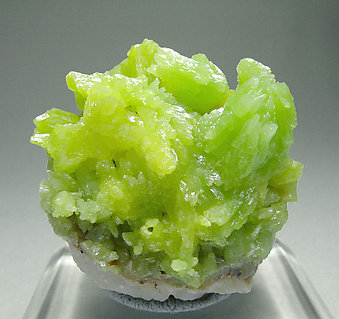
N67VD0: Group of doubly terminated crystals with slightly curved edges. The sample has two different colors, yellow and green.
San Andrés Mine, Realces pocket (Victoria), Espiel, Comarca Valle del Guadiato, Córdoba, Andalusia Spain (10-11/1997)
Specimen size: 3.5 × 3.1 × 2 cm = 1.38” × 1.22” × 0.79”
|
|
|
|
Pyromorphite |
|---|
|
|
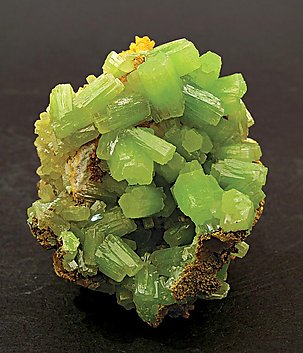
EX29F1: This is one of the first specimens from this find that I sold. I recently recovered it and, as the photo suggests, the quality is very high. Excellent color, good crystal size, and good crystal definition. Many of the crystals are doubly terminated and have the faces of the hexagonal prism and the pinacoid. A real treat.
This specimen was on the cover of the ‘Bocamina’ magazine, issue 18, 2006, which is devoted to the San Andrés Mine.
San Andrés Mine, Realces pocket (Victoria), Espiel, Comarca Valle del Guadiato, Córdoba, Andalusia Spain (11/1997)
Specimen size: 4 × 3.5 × 3 cm = 1.57” × 1.38” × 1.18”
Main crystal size: 0.6 × 0.4 cm = 0.24” × 0.16”
|
|  |
|
| Pyromorphite |
|
|
|
|
|
N43MX3: Irregular aggregate, on matrix of crystals formed by a short prism and the pinacoide, with very well defined faces and edges and showing apple-green color and a very intense luster. Some of the crystals are doubly terminated. The sample is from the excellent, and already famous, find in 1997.
This specimen was published on the Mineralogical Record´s web page, in the ‘What’s New in the Mineral World?’ section, report #34, April 9, 2013 edition.
San Andrés Mine, Realces pocket (Victoria), Espiel, Comarca Valle del Guadiato, Córdoba, Andalusia Spain (10/11-1997)
Specimen size: 5.8 × 5 × 3.8 cm = 2.28” × 1.97” × 1.50”
Main crystal size: 0.9 × 0.5 cm = 0.35” × 0.20”
Minor fluorescence long & short UV
|
|
|
|
Pyromorphite |
|---|
Fluorescent light (daylight)
 |
|
|
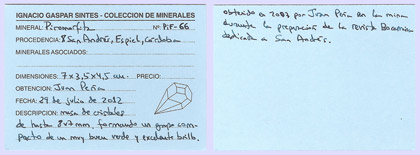
NB16AI5: Groups of mainly prismatic Pyromorphite crystals that coexist with very acute elongated crystals, a very unusual habit for San Andrés Pyromorphite, similar to the samples from El Horcajo.
This sample is from the Ignacio Gaspar collection and we’ll send to the buyer the original label.
San Andrés Mine, Realces pocket (Victoria), Espiel, Comarca Valle del Guadiato, Córdoba, Andalusia Spain (10-11/1997)
Specimen size: 6.4 × 4.7 × 3.6 cm = 2.52” × 1.85” × 1.42”
Main crystal size: 0.5 × 0.4 cm = 0.20” × 0.16”
Minor fluorescence short UV
Former collection of Ignacio Gaspar
|
| |
|
| Pyromorphite |
|
|
|
|
|
N36XX3: Irregular aggregate, on matrix of crystals formed by a short prism and the pinacoide, with very well defined faces and edges and showing apple-green color and a very intense luster. Some of the crystals are doubly terminated. The sample is from the excellent, and already famous, find in 1997.
San Andrés Mine, Realces pocket (Victoria), Espiel, Comarca Valle del Guadiato, Córdoba, Andalusia Spain (10/11-1997)
Specimen size: 7.6 × 5.1 × 3.5 cm = 2.99” × 2.01” × 1.38”
Main crystal size: 0.7 × 0.6 cm = 0.28” × 0.24”
Minor fluorescence long & short UV
|
|
|
|
Pyromorphite |
|---|
|
|
N36AJ1: An extraordinary specimen with very well defined crystals, many of them doubly terminated, bright and of excellent green color, on matrix. One of the most significant specimens from the find.
San Andrés Mine, Realces pocket (Victoria), Espiel, Comarca Valle del Guadiato, Córdoba, Andalusia Spain (10-11/1997)
Specimen size: 9 × 5.5 × 6.5 cm = 3.54” × 2.17” × 2.56”
Main crystal size: 1.2 × 0.7 cm = 0.47” × 0.28”
Minor fluorescence long & short UV
|
| |
|
| Pyromorphite |
|
|
|
|
|
N26FL0: Group of Pyromorphite crystals with varied habit and good color. Crystals vary from well defined hexagonal prisms, to very acute dipyramidal forms, to skeleton growths. On a solid matrix of Limonite.
San Andrés Mine, Realces pocket (Victoria), Espiel, Comarca Valle del Guadiato, Córdoba, Andalusia Spain (11/1997)
Specimen size: 10.6 × 6.6 × 4.8 cm = 4.17” × 2.60” × 1.89”
Main crystal size: 1.2 × 0.5 cm = 0.47” × 0.20”
Fluorescence short UV & minor fluorescence long UV
|
|
|






 Next Page


